

.jpg)
.jpg)
.jpg)
.jpg)
.jpg)
.jpg)
.jpg)
.jpg)
.jpg)
.jpg)
.jpg)
.jpg)
.jpg)
.jpg)
Primary Sources and Historical References
This reference section gathers the family archive records, oral testimony, commemorative publications, genealogical tradition, historical archives, Mulnivasi heritage context, legal context and academic scholarship used to understand the Lakum~Rathod heritage. Each source category opens below for details.
01 Primary Audio Records Direct family testimony Open
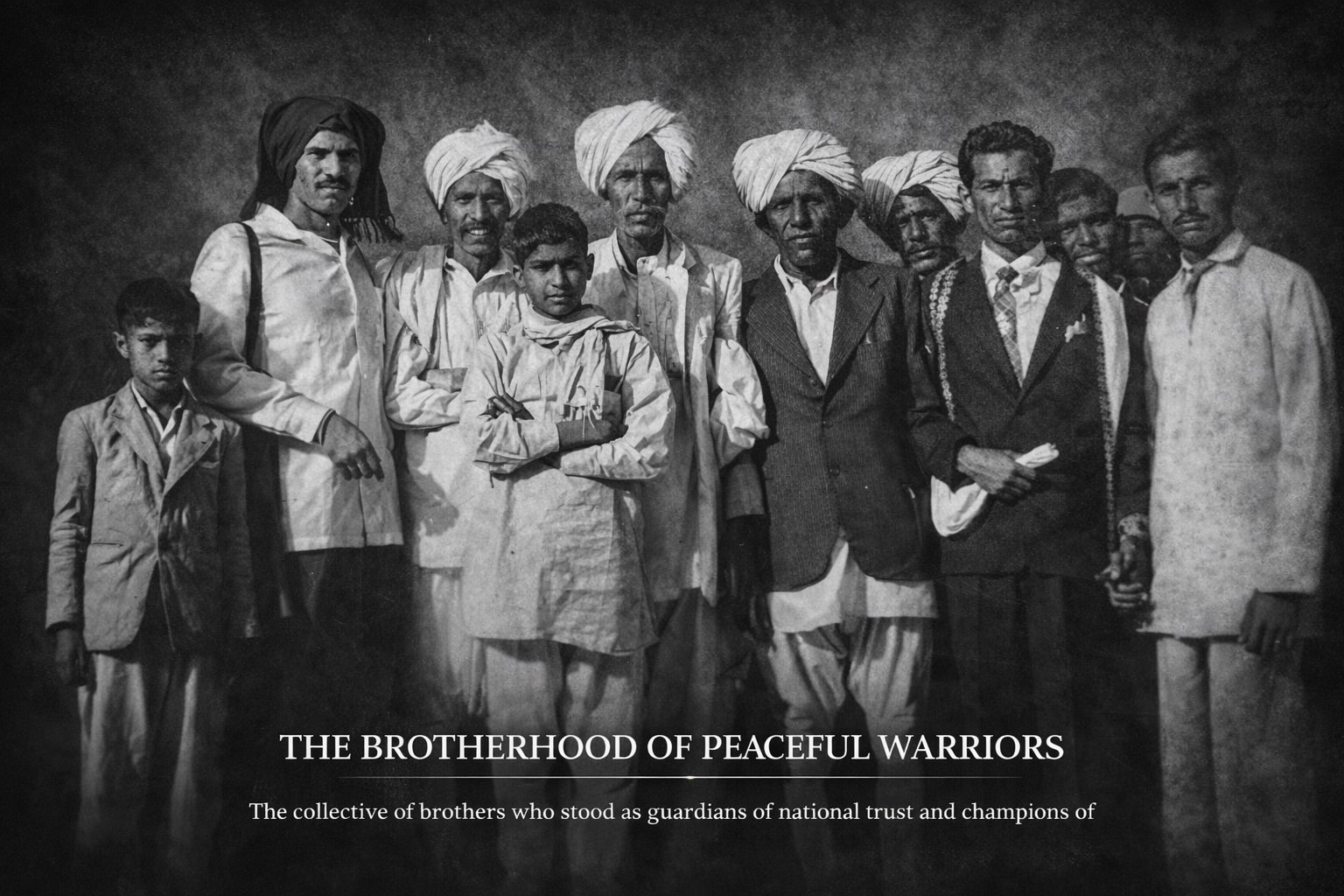
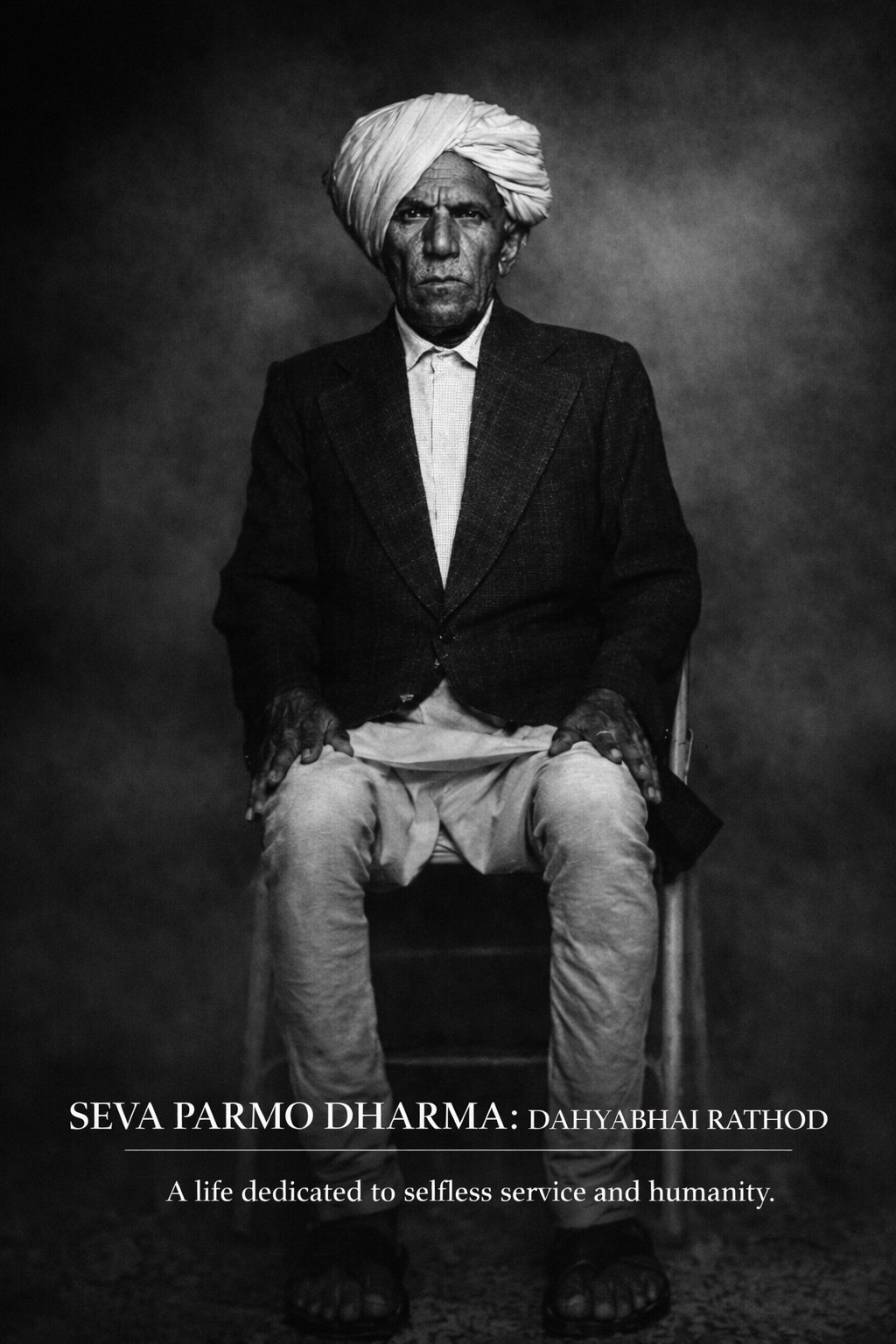
Rathod Family Archive. Direct voice testimony of Freedom Fighter Dahyabhai Rathod.
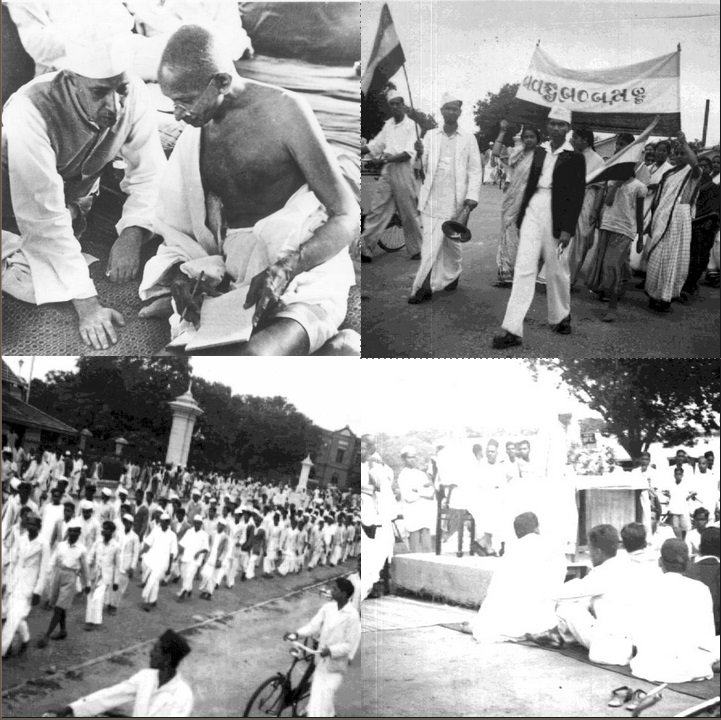
Relevance: Primary family audio record preserving Dahyabhai Rathod's own account of Gandhiji, Sardar Patel, Junagadh, Taravada Ashram, Dholera, the Salt Satyagraha, the Quit India Movement and related family service traditions.
02 Family Research and Living Memory Internal research foundation Open
Dr. N. D. Rathod. Lifetime family history research, oral-history preservation and family archive notes.
Shri Valjibhai Rathod. Social and historical research contribution on the Lakum~Rathod lineage, including the 35-generation genealogical summary and social-historical continuity of the family.
Living descendants of Ramjidada Rathod and related family elders. Preserved oral testimony and family memory used for cross-checking family relationships, inherited accounts, place-memory and lineage continuity.
03 Historical Publications Commemorative public record Open
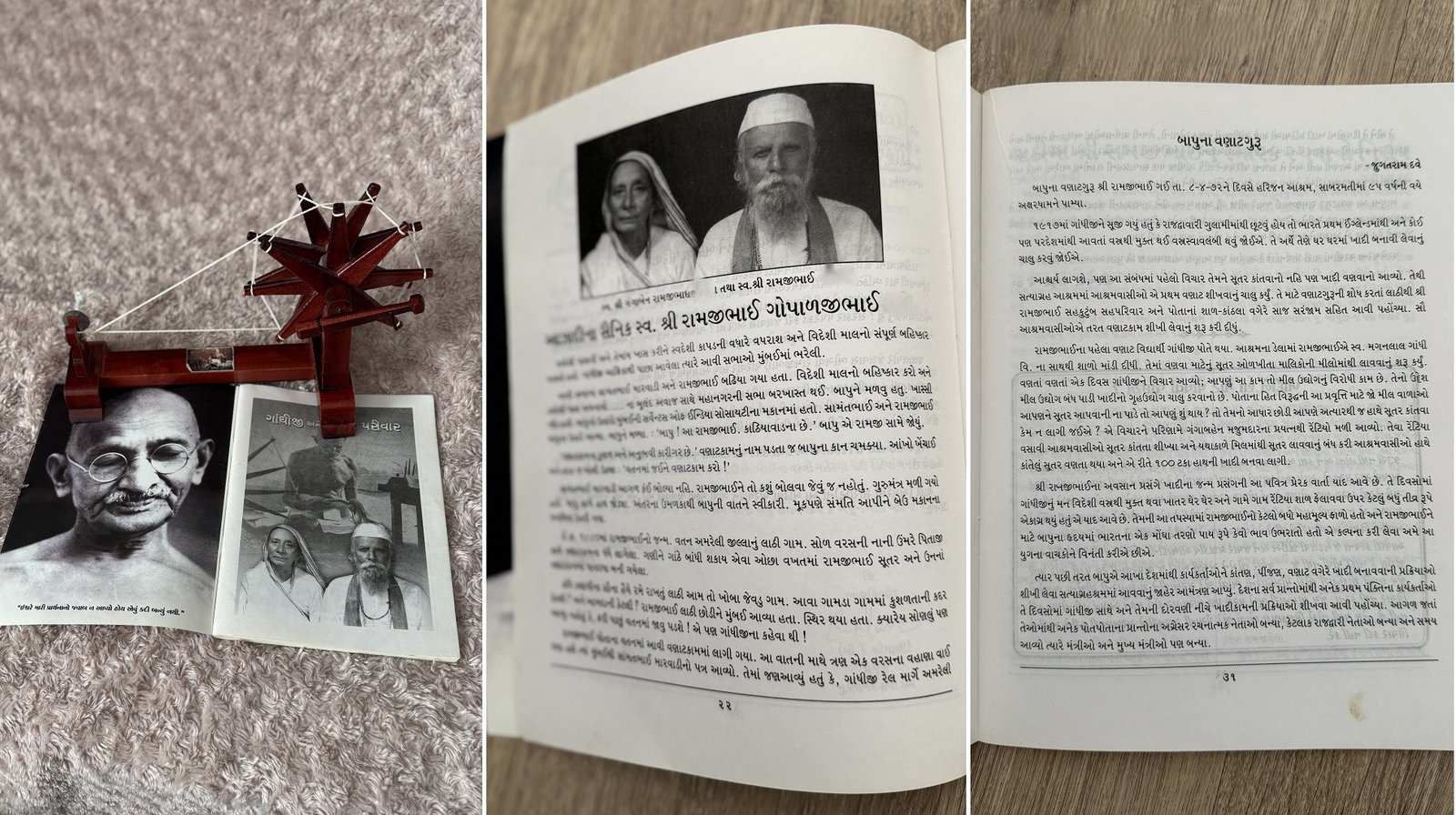
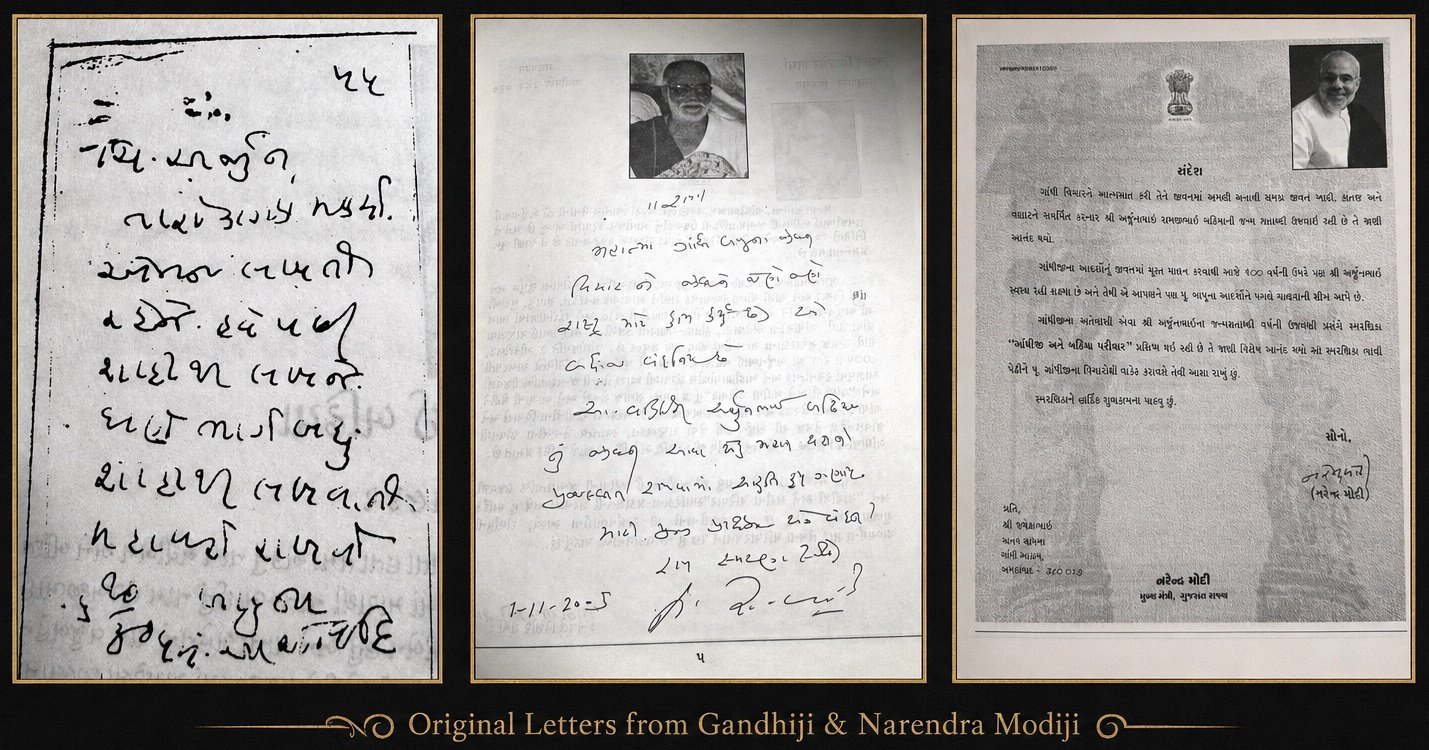
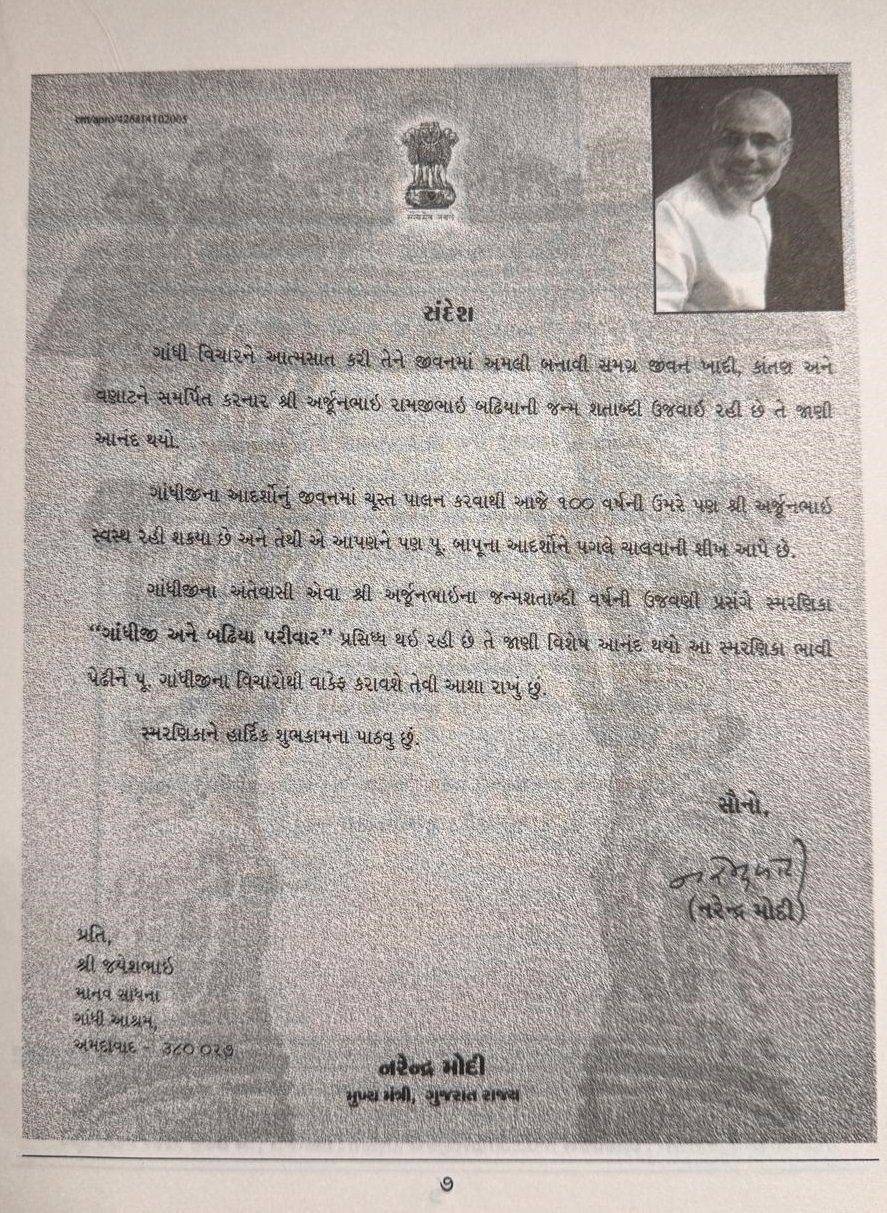
Janma Satabdi Samaroh Samiti. Gujarati commemorative volume published in honour of Living Gandhian Arjundada's 100 years.
Relevance: Public commemorative publication documenting the Gandhian heritage and social respect surrounding Arjundada and the wider family tradition. The publication is associated with the work of Jayeshbhai Patel and Ajitbhai Jadav and included messages or blessings from respected public figures including Narendra Modi, then Chief Minister of Gujarat, Rajyapal Naval Kishor Sharma, Anandiben Patel, Amit Shah, Morari Bapu and other dignitaries.
04 Genealogical Records Barot tradition and lineage summary Open
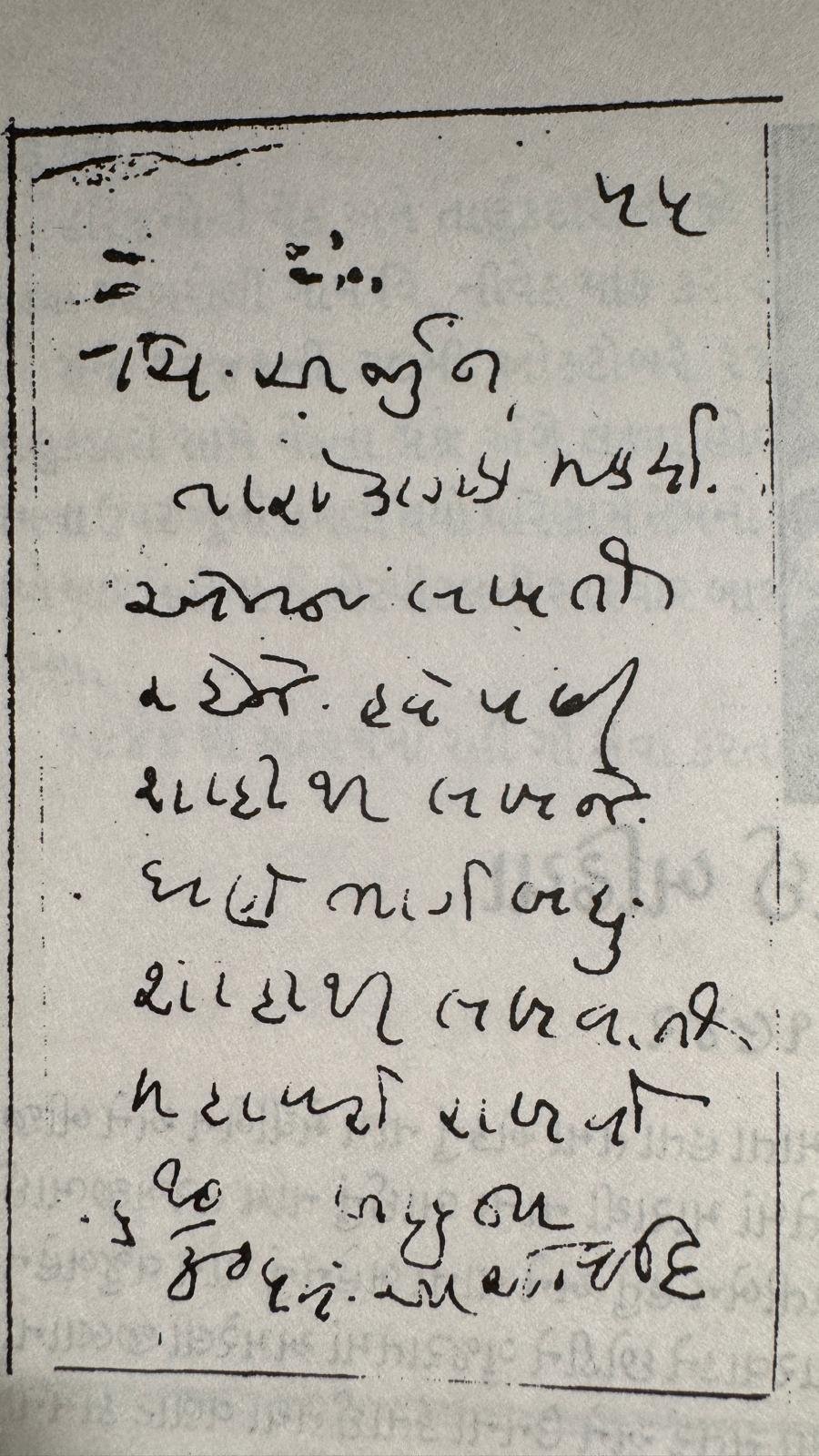
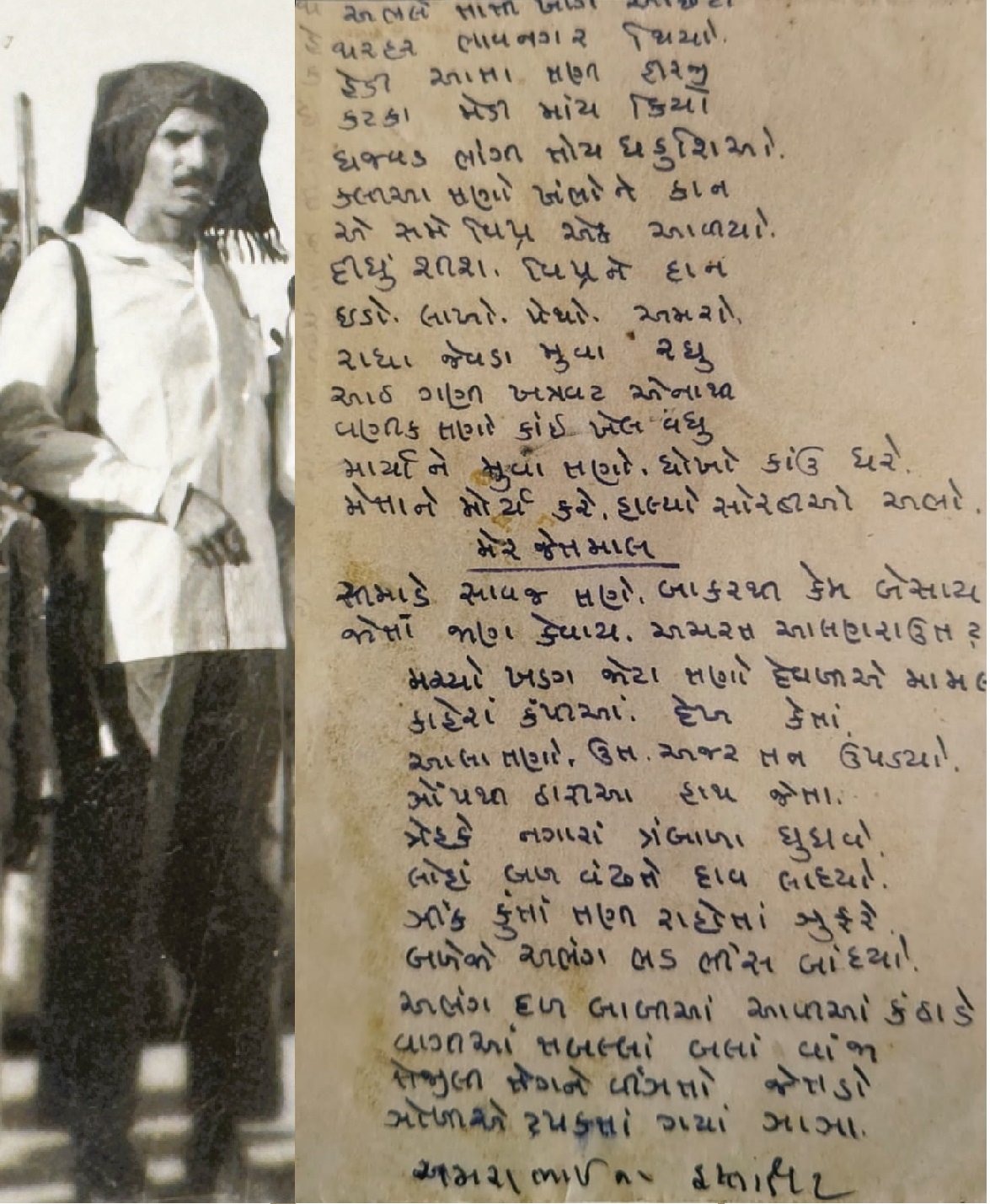
Rajkot Barot Chopda. Traditional Lakum~Rathod genealogical record.
35-generation Lakum~Rathod lineage summary. Preserved through Valjibhai Rathod and family archive tradition.
Relevance: Traditional genealogical material preserving lineage, generational memory and family relationships. At this stage, Barot Chopda images should remain unpublished until proper reading, verification and transcription are completed.
Legal-safe note: Barot records are treated here as supporting and contextual genealogical material. They are not presented as automatic or conclusive legal proof.
05 Historical Archives Gandhian and national context Open
Gandhi Ashram records and related Sabarmati Ashram historical material.
Government of India preserved writings and records relating to Mahatma Gandhi.
Relevance: Historical background sources for Gandhiji's writings, correspondence, campaigns, Dholera, the Salt Satyagraha, Taravada Ashram and the wider national freedom struggle.
06 Mulnivasi Ancestral Heritage Lakum~Rathod and Relatives Mulnivasi Identity Open
Mulnivasi Sangh. (2021). Mulnivasi Sangh Introduction (3rd ed.). D. K. Khaparde Memorial Trust.
Authenticity details: This publication is presented as an official organisational booklet. It does not carry a commercial ISBN. Its authenticity is supported by the publication details stated in the document, including organisation registration under the Societies Act in New Delhi with registration number S-52349, publisher D. K. Khaparde Memorial Trust, Mumbai, official distributor Mulnivasi Sangh Central Office, New Delhi, and print verification by Aloka Media Private Limited, Nagpur.
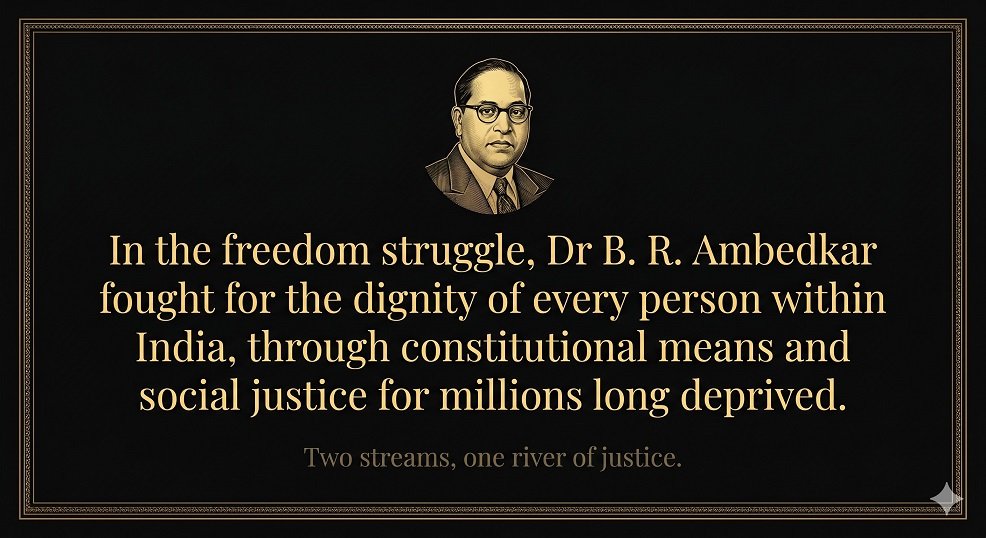
Relevance to Lakum~Rathod and Relatives Heritage: The booklet provides ideological context for the Mulnivasi identity, describing the original inhabitants of India and the Indus Valley Civilisation within a Phule-Ambedkarite social justice framework. It is relevant to the website's interpretation of the Lakum~Rathod and relatives heritage as carrying a Mulnivasi Maurya spirit connected with dignity, equality, self-respect and principled public service.
Contextual use: This source is used as ideological and social-movement context. It is not presented as direct genealogical proof of the Lakum~Rathod family lineage.
07 Mulnivasi Historical Interpretation Ancient Indian History According to Dr. B. R. Ambedkar Open
Ambedkar, B. R. (1987). Revolution and counter-revolution in ancient India. In V. Moon (Ed.), Dr. Babasaheb Ambedkar: Writings and Speeches (Vol. 3). Education Department, Government of Maharashtra.
Phule, J. G. (1873). Gulamgiri [Slavery].
Relevance: Ambedkar's historical analysis and Phule's social reform thought provide intellectual context for understanding how Mulnivasi identity was consolidated as a framework of dignity, social equality, resistance to imposed hierarchy and democratic self-respect. These works help explain the broader ideological background of the heritage narrative, while they are not presented as direct genealogical proof of the Rathod family.
Relevance to Lakum~Rathod and Relatives Heritage: These sources support the interpretive context of the Lakum~Rathod and relatives heritage as a tradition of principled independence, public duty, equality and resistance to caste-based social subordination.
08 Epigraphy, Scripts and Inscriptions Script and inscription background Open
Salomon, R. (1998). Indian Epigraphy: A Guide to the Study of Inscriptions in Sanskrit, Prakrit, and the Other Indo-Aryan Languages. Oxford University Press.
Relevance: Scholarly background for Indian scripts, inscriptions, epigraphic methods and historical interpretation. It should not be used to claim that any specific Barot page has been verified until that page is independently read and transcribed.
Relevance to Lakum~Rathod and Relatives Heritage: This source helps frame the careful reading of old scripts and inscriptional traditions when future Barot Chopda images are verified and transcribed.
09 Mauryan and Ancient Indian History Historical context Open
Thapar, R. (1997). Aśoka and the Decline of the Mauryas. Oxford University Press.
Relevance: Standard academic reference for Aśoka, the Mauryan Empire and the decline of the Mauryas. Use this source to anchor Mauryan historical context in established scholarship.
Relevance to Lakum~Rathod and Relatives Heritage: This source provides broader historical context for public discussion of Mauryan-era political, ethical and civilisational memory. It is not direct proof of family lineage.
10 Anthropology and Gujarat Context Regional social context Open
Singh, K. S. (Ed.). (2003). People of India: Gujarat (Vol. XXII). Anthropological Survey of India.
Relevance: Government-backed anthropological reference for Gujarat communities, regional identities and historical social movement patterns. Use for broad Gujarat and Saurashtra context, not as direct proof of the specific family genealogy.
Relevance to Lakum~Rathod and Relatives Heritage: This source helps locate the family narrative within wider Gujarat and Saurashtra social-history context.
11 Indus Valley Archaeology Archaeological background Open
Kenoyer, J. M. (1998). Ancient Cities of the Indus Valley Civilization. Oxford University Press.
Possehl, G. L. (2002). The Indus Civilization: A Contemporary Perspective. AltaMira Press.
Relevance: General archaeological background on the Indus Civilisation, including urbanism, craft, trade and settlement patterns. These sources are not presented as specific evidence for the Rathod family lineage.
Relevance to Lakum~Rathod and Relatives Heritage: These sources provide the broader archaeological setting for the website's discussion of ancient indigenous and civilisational continuity.
12 Population Genetics and Ancient DNA Population-level scientific context Open
Reich, D., Thangaraj, K., Patterson, N., Price, A. L., & Singh, L. (2009). "Reconstructing Indian Population History." Nature, 461, 489-494.
Moorjani, P., Thangaraj, K., Patterson, N., Lipson, M., Loh, P. R., Govindaraj, P., Berger, B., Reich, D., & Singh, L. (2013). "Genetic Evidence for Recent Population Mixture in India." American Journal of Human Genetics, 93(3), 422-438.
Narasimhan, V. M., Patterson, N., Moorjani, P., et al. (2019). "The Formation of Human Populations in South and Central Asia." Science, 365(6457), eaat7487.
Shinde, V., Narasimhan, V. M., Rohland, N., Mallick, S., Mah, M., Lipson, M., et al. (2019). "An Ancient Harappan Genome Lacks Ancestry from Steppe Pastoralists or Iranian Farmers." Cell, 179(3), 729-735.e10.
Relevance: Population-level scientific context for South Asian population history, ancient DNA and ancestry debates. These sources should not be phrased as proving direct genetic continuity for any specific modern family.
Relevance to Lakum~Rathod and Relatives Heritage: These sources support careful population-level context for ancient South Asian ancestry discussions. They are not used as individual family DNA evidence.
13 Accessible Scientific Syntheses Public-facing explanatory works Open
Joseph, T. (2018). Early Indians: The Story of Our Ancestors and Where We Came From. Juggernaut.
Reich, D. (2018). Who We Are and How We Got Here: Ancient DNA and the New Science of the Human Past. Pantheon / Vintage.
Relevance: Public-facing scientific syntheses that explain ancient DNA, archaeology, linguistics, migration debates and global human population history. These books should be used as explanatory context, not as primary genetic evidence.
Relevance to Lakum~Rathod and Relatives Heritage: These works help general readers understand the broader scientific debates around ancestry, migration and ancient population history behind the website's civilisational context.
14 Legal and Historical Context Evidence assessment context Open
The Bharatiya Sakshya Adhiniyam, 2023. "The Bharatiya Sakshya Adhiniyam, 2023, enforced from 1 July 2024."
Relevance: Provides legal context for how matters such as custom, usage, family relationship and opinions from persons with special knowledge may become relevant in evidence assessment. It should not be used to claim that Barot records are automatically conclusive legal proof.
Relevance to Lakum~Rathod and Relatives Heritage: This legal context supports a careful, evidence-assessment approach to genealogical records, oral testimony and family relationship materials without overstating their legal conclusiveness.